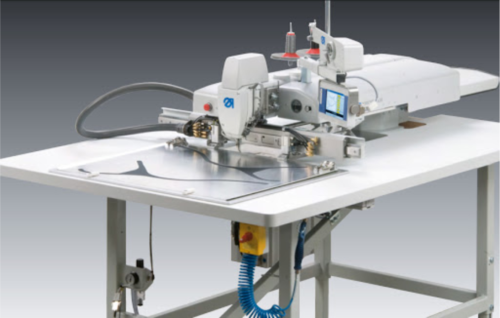
CNC programmable sewing
CNC Sewing: Precision, Automation, and Efficiency in Modern Textile Production CNC sewing represents a cutting-edge technology where the sewing process is fully computer-controlled. It involves programmable, automated stitching, with the movement of both the fabric and needle guided by a control system based on a digital design—eliminating the need for manual intervention. This ensures absolute precision, repeatability, and high production speed, with each piece sewn to identical quality and accuracy. CNC sewing systems are capable of handling large-format materials, such as blankets, mattress covers, headboards, upholstered seats, technical textiles, and padding. Their applications span interior design, upholstered furniture production, as well as automotive and aerospace industries. Key advantages of CNC sewing: Precision and repeatability: Every stitch and shape matches the digital model exactly, avoiding errors caused by human factors. Process automation: The machine follows a digital pattern, moving and rotating the fabric along a programmed trajectory. Flexibility and rapid design changes: Using CAD/CAM systems, new patterns can be loaded, stitch geometry adjusted, or product parameters modified quickly. Efficiency in series production: Ideal for repeated sewing of identical products with minimal errors and maximum speed. Complex patterns and shapes: CNC sewing allows the creation of intricate decorative or functional designs that would be nearly impossible to achieve manually. CNC sewing technology represents a significant advancement in textile and upholstery manufacturing. Integration with CAD/CAM systems enables fast design preparation, optimized stitching paths, and consistent results. The outcome is a reliable, precise, and highly productive process that meets modern industrial demands for quality, efficiency, and flexibility.